A redesign concept exploring how reducing uncertainty can help users complete purchases with greater confidence. People often add products to their cart with clear purchase intent, yet leave before completing the transaction. This project investigates why confidence breaks during checkout and how design can help users move forward with greater certainty.
PRICE CLARITY
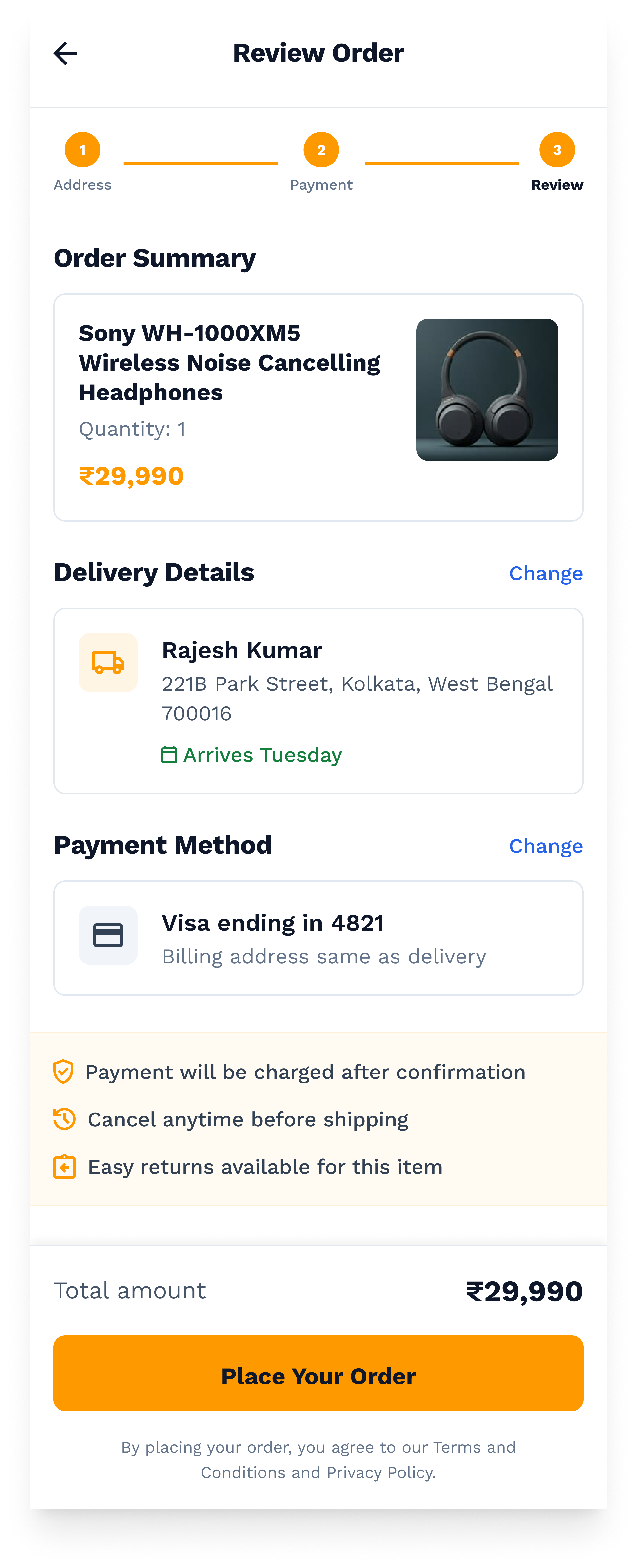
₹29,990 Total
DELIVERY
Arrives Tuesday
THE OBSERVATION
By the time users reach checkout, the product has already done its job. They've explored the product. Compared alternatives. Read reviews. Added it to their cart.
Yet many still leave.
In many cases, the issue isn't product desirability. It's uncertainty. Questions begin to appear:
What is the final cost?
When will it arrive?
Can I trust this purchase?
This project explores how reducing those moments of hesitation could create a more intuitive checkout experience.
Each question introduces uncertainty, and uncertainty directly affects decision making.
Users often discover important pricing details, taxes, and hidden shipping fees too late in the journey, causing immediate hesitation.
Delivery information can feel vague or obscured precisely when users are preparing to commit to the final transaction.
Questions about cancellation policies, returns, and order control can increase hesitation at the final point of friction.
DESIGN APPROACH
Instead of designing new features, the goal was to redesign how information is presented during checkout. The interface acts as a reassuring guide rather than just a transaction terminal.
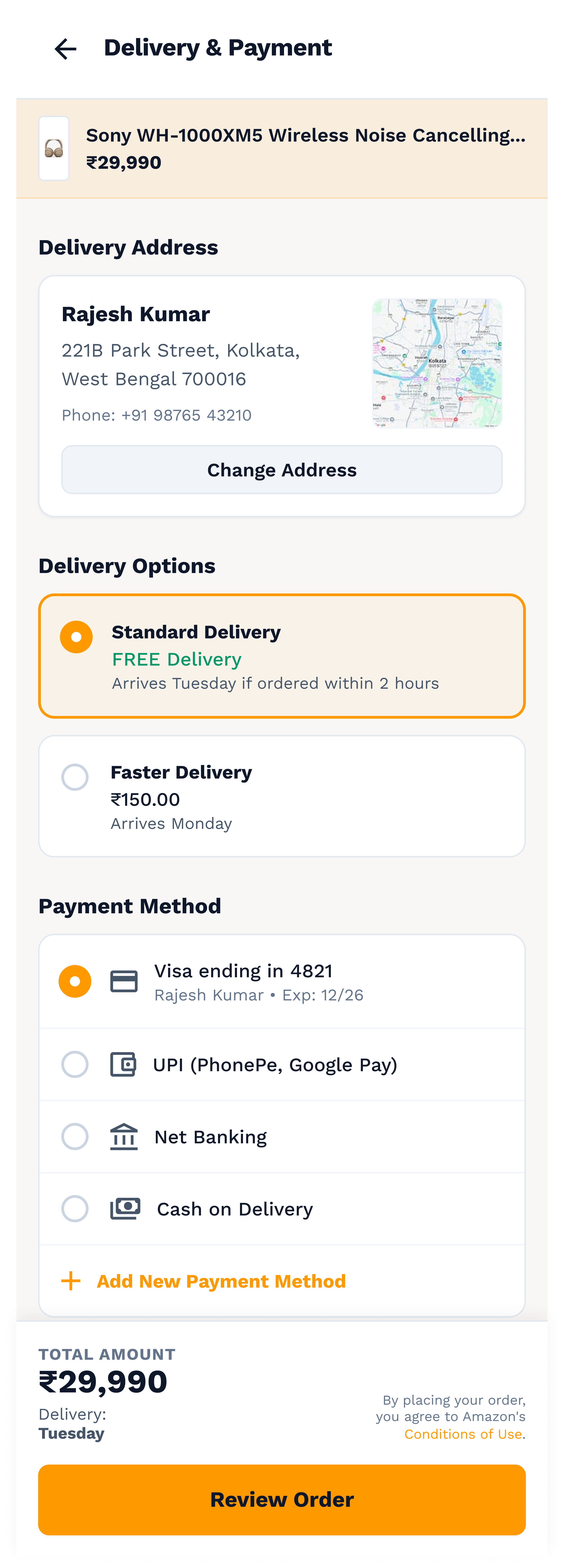
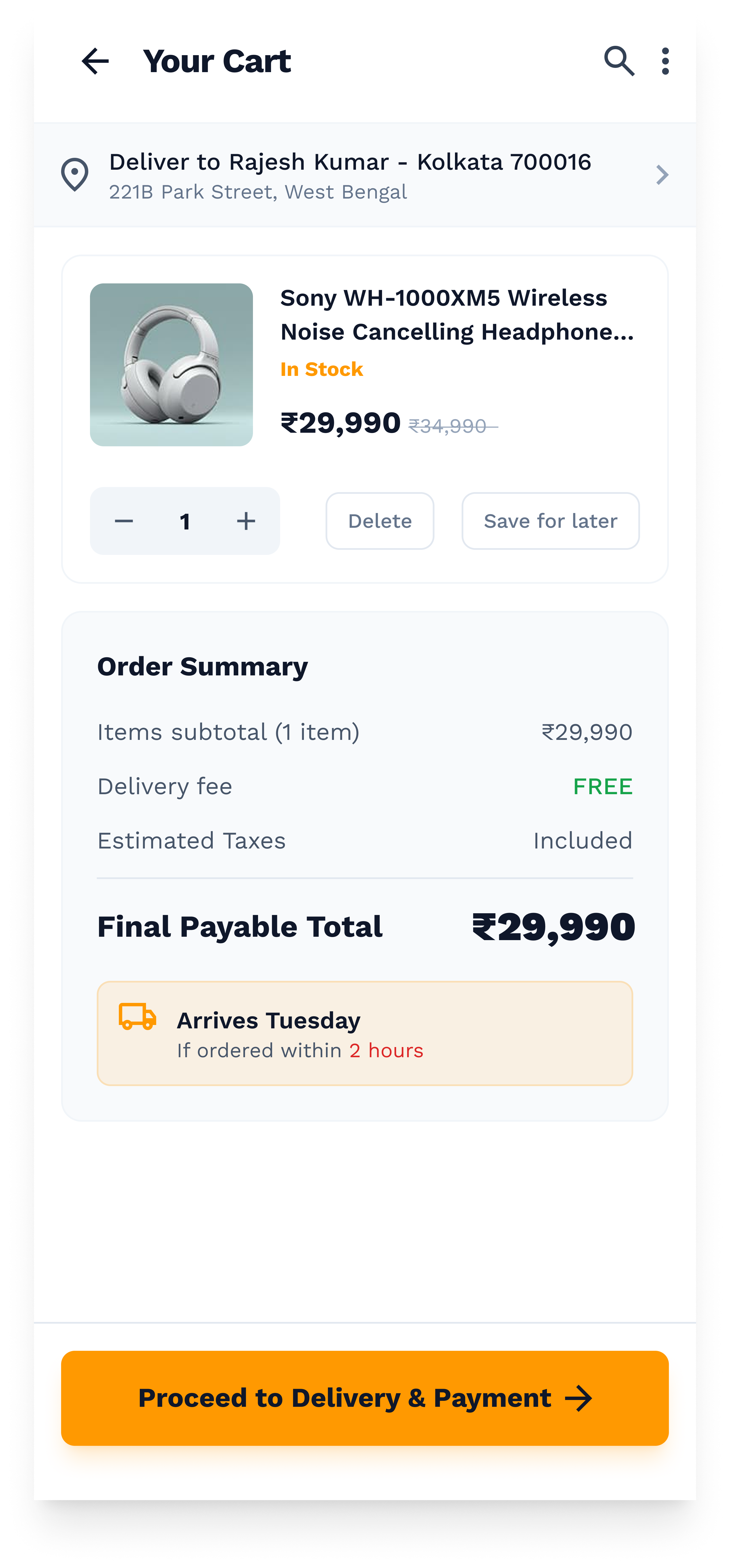
Surfacing the total cost instantly removes the fear of hidden fees at the final step.
Positioning arrival dates prominently before the user enters payment details.
Streamlining steps to prevent decision fatigue from derailing the purchase intent.
Adding subtle trust signals right near the primary call-to-action.
Showing the final payable amount earlier helps reduce uncertainty before commitment. By making the total cost explicitly clear upfront, we eliminate the primary cause of final-step drop-offs.
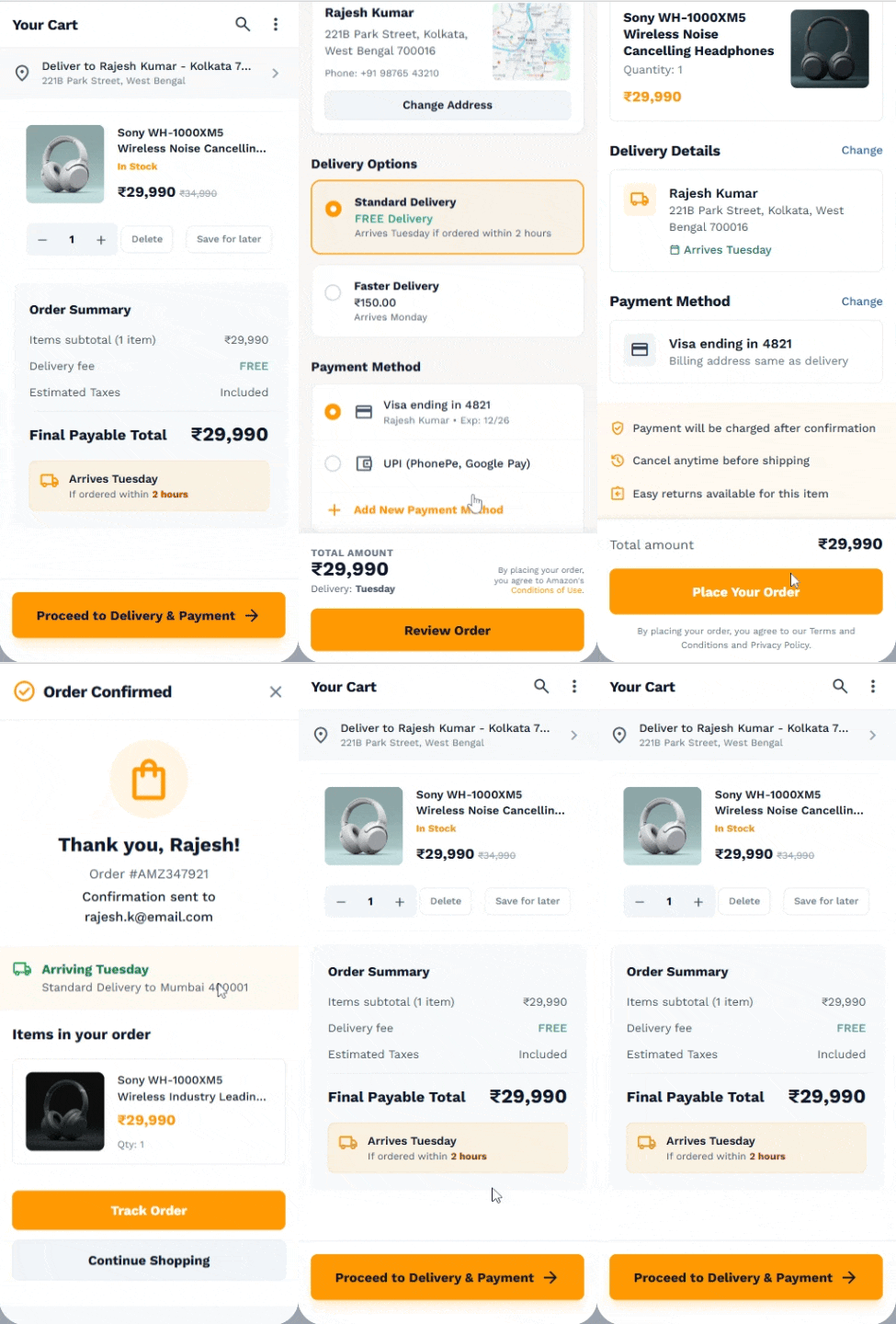
Furthermore, reducing unnecessary transitions creates a smoother purchase experience. Users can review items and proceed without navigating a fragmented multi-page maze.
Clear delivery expectations help users make decisions with greater confidence. The interface highlights arrival dates directly on the main checkout path, tying the purchase to a real-world expectation.
Keeping critical information visible reduces the need to repeatedly verify details. An omnipresent order summary ensures the user always knows exactly what they are committing to, fostering trust.
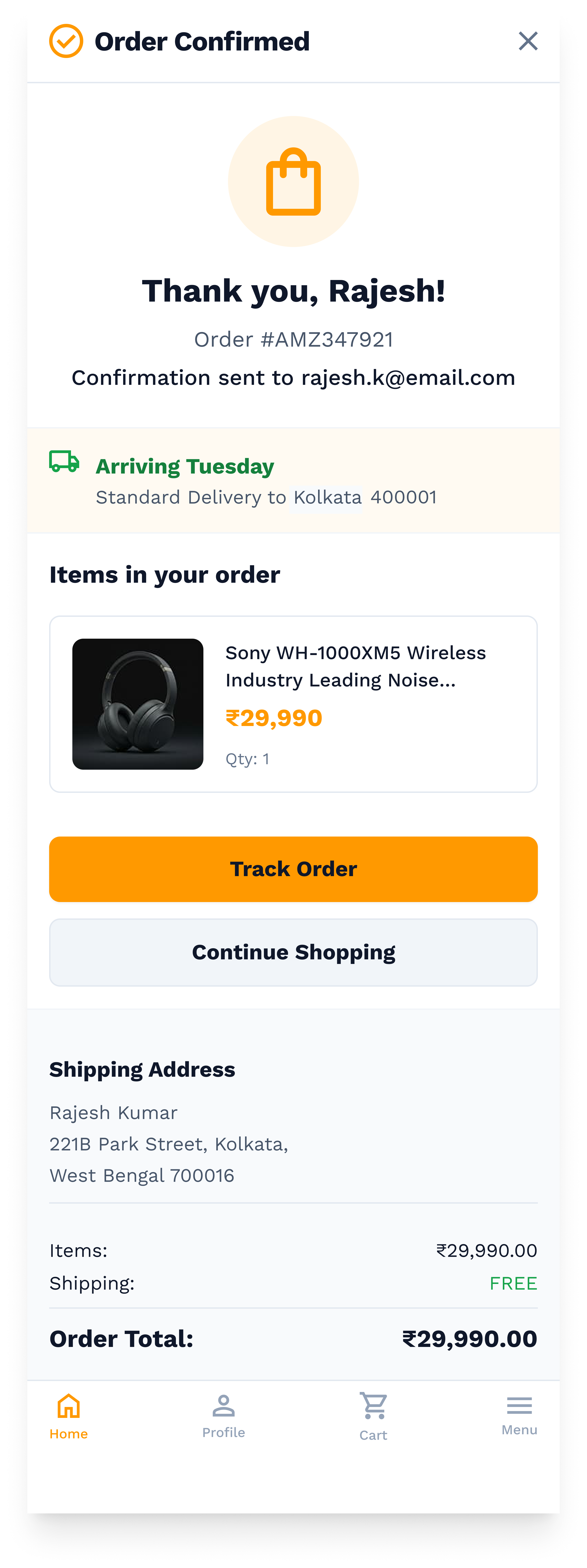
A seamless transition from cart to confirmation, prioritizing visual stability and confidence.
Move critical pricing information closer to decision making moments, preventing sticker shock at the end of the journey.
Provide clear arrival expectations before payment, directly linking the transaction to physical gratification.
Simplify the checkout journey by stripping away distracting upsells during the most critical focus phase.
Help users feel confident that their action was successful through positive visual feedback and immediate post-purchase clarity.
Faster decision making and fewer interruptions for users who just want to complete their routine purchases efficiently.
Greater confidence and trust before committing to a platform they are less familiar with.
Potentially fewer abandoned purchases and smoother checkout experiences driving long-term customer loyalty.
This project was not launched and therefore no production data exists. The outcomes presented are based on research, personal surveys, behavioral analysis, and design assumptions.
Expected areas of improvement include:
The biggest takeaway from this project was that checkout abandonment is not always a pricing problem or a usability problem.
Often it is a confidence problem.
Small moments of uncertainty can have a disproportionate impact on decision making. Design can help reduce that uncertainty by making important information visible at the right moment.
Cart abandonment is influenced by many factors beyond checkout design.
While these areas are important, addressing them properly would require significantly deeper research, behavioral testing, and production level data.
For this project, I chose to focus specifically on confidence and information clarity during checkout because I believe it is one of the most impactful opportunities within the purchasing journey.